


Practical Introduction to 10kV Ring Main Unit (RMU)
1. Overview of Ring Main Unit
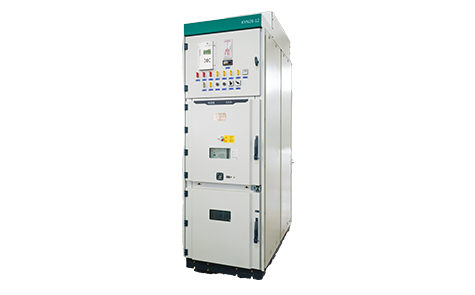
The full name of RMU is Ring Main Unit, a modular high-voltage switchgear widely adopted in 10kV distribution networks.
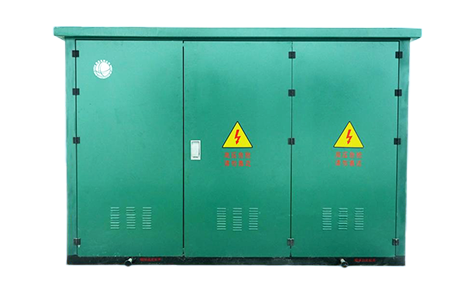
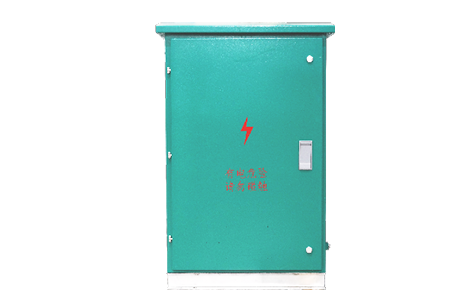
Its core functions include constructing ring power supply circuits, realizing line segmentation, load transfer and rapid fault isolation, so as to fundamentally improve regional power supply stability. Many people confuse ring main units with cable branch boxes. The key difference lies in that branch boxes only serve cable connection without switching and protection components, while ring main units are equipped with built-in load switches, circuit breakers and other control & protection parts. They can independently control circuit on-off and come with inherent fault protection, making them essential basic equipment for distribution network automation upgrading.

2. Cabinet Structure and Classification
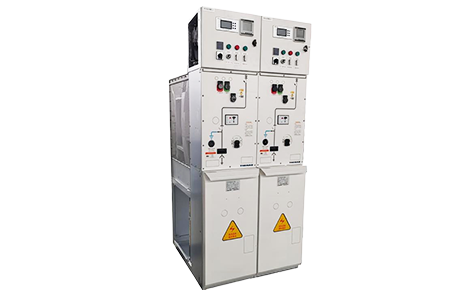
Mainstream 10kV ring main units adopt assembled modular design, with configurable schemes such as 2-inlet 4-outlet and 2-inlet 5-outlet according to site demands. Each power supply circuit corresponds to an independent cabinet module, which falls into three functional categories:
(1) Ring Inlet & Outlet Connection Unit
It relies on load switches to receive power from upstream substations and connect to adjacent ring main units to build the "hand-in-hand" ring power supply circuit. A disconnection point is reserved in the ring circuit during normal operation to prevent parallel operation of dual power sources. Once a line fault occurs, the break point can be closed to switch the power supply loop and guarantee uninterrupted power for downstream users.
(2) Feeder Outlet Unit
Equipped with load switch-fuse combination devices or vacuum circuit breakers, it distributes 10kV high-voltage power to downstream facilities including community power distribution rooms, box-type transformers and cable branch boxes. In case of short-circuit faults on downstream lines, fuses will blow instantly and circuit breakers trip synchronously to cut off the faulty branch separately, while other circuits remain powered normally without interference.
(3) PT Voltage Transformer Unit
It collects real-time line voltage data. On one hand, it supplies operating power for cabinet operating mechanisms, protection devices and automation terminals; on the other hand, it realizes line voltage monitoring and live-line status indication, enabling maintenance staff to directly judge the live condition of circuits.
Classified by internal insulating medium, ring main units are divided into air-insulated type and SF6 gas-insulated type. For SF6 gas-insulated units, all live components and switches are sealed inside stainless steel air tanks. They feature smaller footprint, higher protection level and lower failure rate, thus being most widely applied in urban distribution network projects at present.


3. Actual Operation Logic
Normal Operating Condition
Power is delivered from the 10kV busbar of the substation to the connection unit of the primary ring main unit, distributed to each outlet unit via the internal common busbar, and then transmitted to surrounding power loads. Two adjacent ring main units are connected by cables to form a ring loop, and the sectionalizing switch reserved on the ring circuit stays open to eliminate potential safety hazards caused by parallel dual power supply.
Fault Handling Process
If a fault occurs on the connecting cable between two ring main units, the switches at both ends of the faulty line will trip immediately to isolate the faulty area. Afterwards, the originally open connection switch on the ring will be closed to rearrange the power supply path. Only the small faulty section suffers power cut, and most users can resume power supply rapidly, greatly narrowing the scope of power outage.
4. Main Application Scenarios
Urban central business districts, hospitals, primary and secondary schools and other areas with high power supply reliability requirements, for building ring power supply networks;
Various industrial parks, to realize segmented control of power distribution lines and accurate isolation of factory fault points;
Indoor 10kV power distribution rooms of high-rise residential buildings and large residential communities;
New energy charging stations, data computer rooms and other places requiring dual-circuit standby power supply to ensure continuous power supply.
5. On-site Operation, Maintenance and Safety Specifications
Strictly implement the "five-prevention" interlock safety rules for switchgears, which are mandatory on-site operation standards: it is forbidden to disconnect or close isolating switches under load, install earthing wires on live equipment, or close switches with earthing wires connected, so as to avoid safety accidents caused by misoperation.
Regularly monitor the internal air tank pressure of SF6 gas-insulated cabinets and replenish gas timely when pressure is insufficient. Insufficient gas pressure will severely weaken the arc extinguishing performance of switches and easily induce short-circuit and discharge faults.
Ring main units can be fitted with DTU automation terminals to realize remote measurement, remote switching on/off and remote upload of equipment status. When line faults happen, the system can independently complete fault isolation and power supply self-healing without manual on-site operation by maintenance personnel.


Inquiry
Please contact us for more information