


How to Select Electrical Equipment Correctly? Complete Selection Guide for Factory & Commercial Buildings | Avoid Pitfalls & Waste
How to Select Electrical Equipment Correctly? Complete Selection Guide for Factory & Commercial Buildings | Avoid Pitfalls & Waste
Electrical equipment selection is the core of electromechanical engineering for factories and commercial buildings, which directly determines power safety, operational stability, operation and maintenance costs, and acceptance pass rate. Most on-site problems such as frequent tripping, equipment burnout, high energy consumption, and rework rectification stem from improper selection in the early stage. Factories feature heavy-duty impact loads and harsh operating conditions, while commercial buildings have complex electrical equipment and strict fire protection standards. The selection logic for the two scenarios is completely different and cannot be applied universally. This article summarizes a standardized and implementable selection guide that complies with safety regulations, ensures stable durability, and controls costs, suitable for most factory and commercial projects.
I. General Core Selection Principles (Applicable to All Projects)
Whether for factories or commercial buildings, four fundamental principles must be followed to avoid potential hazards and waste from the source. First, load adaptation: the rated parameters of all equipment shall exceed the actual calculated load, with a 15%–30% margin reserved for future equipment addition and business adjustment. Second, scenario adaptation: distinguish between industrial heavy load, civil light load, humid/dust-proof, fire emergency and other working conditions, and avoid universal equipment misuse. Third, compliance priority: strictly comply with electrical and fire protection specifications to ensure all key circuit configurations meet standards and prevent acceptance failures. Fourth, hierarchical cost performance: prioritize quality and stability for core main equipment, and control costs reasonably for terminal ordinary equipment to eliminate hidden dangers from under-selection and fund waste from over-selection. The load rate of daily equipment shall be maintained at 0.6–0.8; excessively low load leads to energy waste, while excessively high load causes overload and aging.
II. Selection of Core Power Distribution Main Equipment
1. Transformer Selection
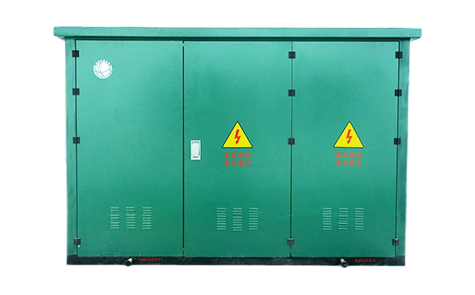
As the core of the power distribution system, transformers are selected mainly based on type and capacity. Dry-type transformers feature fire resistance, oil-free safety and simple maintenance, making them the standard choice for personnel-intensive commercial buildings such as shopping malls, office buildings and basements. Oil-immersed transformers have strong overload capacity, high cost performance and excellent durability, but poor fire resistance. They are only applicable to independent outdoor substations and open factory areas, and are strictly prohibited for enclosed public commercial areas. Factories with numerous motors and stamping equipment face frequent impact loads, so transformer capacity should be appropriately enlarged to avoid voltage fluctuation. Commercial buildings have stable loads and shall prioritize low-loss dry-type transformers to reduce long-term power consumption costs.
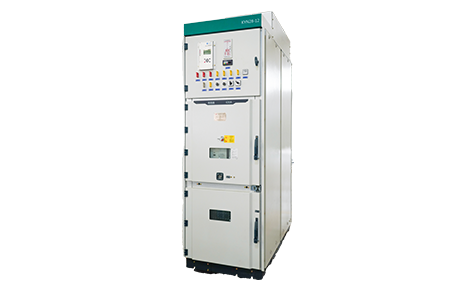
2. High and Low Voltage Distribution Cabinet Selection
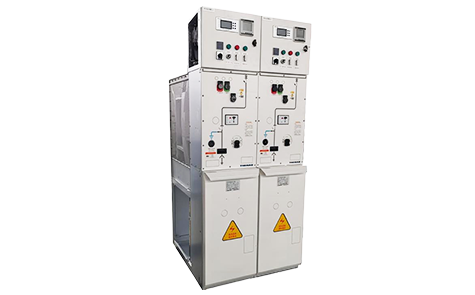
High-voltage cabinets shall uniformly adopt vacuum circuit breaker cabinets with superior insulation and arc extinction performance, applicable to all building high-voltage power distribution scenarios, and non-standard simple cabinets are forbidden. Low-voltage cabinets are configured hierarchically by current: air circuit breakers (ACB) are used for main incoming and bus tie circuits above 630A to ensure main circuit stability; molded case circuit breakers (MCCB) are adopted for feeder circuits below 630A to match high-power dynamic loads; miniature circuit breakers (MCB) are applied for terminal lighting and socket circuits below 63A to realize refined protection. Hierarchical matching effectively avoids faults and unnecessary waste.
III. Precise Selection of Terminal Equipment (Reducing 80% of Daily Faults)
1. Circuit Breaker Selection
Circuit breaker selection depends not only on current rating but also on tripping type. D-type tripping circuit breakers must be used for impact loads such as factory motors and production lines to withstand instantaneous large starting current and prevent accidental tripping. C-type tripping circuit breakers with higher cost performance are suitable for stable loads including commercial lighting, sockets and air conditioners. In addition, single-magnetic tripping circuit breakers are required for special fire protection circuits to avoid misoperation of thermal tripping and ensure continuous power supply for fire-fighting equipment during fires, which is a mandatory acceptance requirement.
2. Cable and Supporting Equipment Selection
3+2 core cables are used for conventional power equipment and 2-core cables for lighting circuits; shielded cables are equipped for factory frequency conversion equipment to resist electromagnetic interference. For large-current circuits above 630A, ordinary cables shall be replaced with enclosed busbars, which feature stable current carrying, good heat dissipation and low failure rate, suitable for high-power factory equipment and full-floor commercial power distribution. Flame-retardant, waterproof and dustproof special cables are adopted for humid underground areas and dusty workshops to adapt to special working conditions. Contactors, control buttons and other components shall be selected strictly according to load categories, and durable heavy-duty models shall be used for heavy-load equipment to avoid contact ablation and premature equipment failure.
IV. Differential Selection: Factories VS Commercial Buildings
1. Industrial Factory Selection: Durability, Impact Resistance & Expandability
Factories are characterized by frequent equipment start-stop, severe impact loads and dusty/oily environments. The selection focuses on heavy-duty performance with sufficient margin reserved for transformers and circuit breakers, and all power circuits are adapted to impact load standards. Equipment cabinets are treated with dustproof, rust-proof and grounding protection. Priority is given to operational stability and expandability rather than appearance to avoid frequent shutdown failures.
2. Commercial Building Selection: Safety, Fire Compliance & Low Energy Consumption
Commercial buildings feature dense crowds, complex equipment and stringent fire protection requirements. Fire-resistant dry-type power distribution equipment is fully adopted with segmented circuits for floors, households, lighting, sockets and shops to facilitate later operation and maintenance. Independent dedicated circuits are set for fire power distribution, emergency lighting and smoke exhaust equipment to fully comply with fire protection codes. The overall selection focuses on low noise, low energy consumption, high safety and stability, balancing user experience and acceptance standards.
V. Ultimate Pitfall & Cost-Saving Tips
Most project waste and hidden dangers arise from one-size-fits-all selection. Core tips: avoid blind over-sizing for all equipment, prioritize quality for main equipment and control costs for terminals; do not apply commercial light-load configurations to factories to prevent insufficient power and frequent tripping; do not adopt industrial heavy-duty equipment for commercial buildings to avoid excessive investment and high energy consumption. In addition, configure independent protection for all dynamic loads, replace cables with busbars for large-current circuits, and arrange independent wiring for fire circuits. Adhere to load calculation prior to equipment selection to achieve full compliance, maximum cost reduction, and error-free, waste-free equipment selection.


Inquiry
Please contact us for more information